Accelerating Research for Early Development of Innovative Antibodies
Bernard MAILLÈRE – UMR 0496
CEA – INRAE – Paris Saclay University
Medecine and Healthcare Technologies Department
Antibody
Developability
Multi-specific
Antibody drug-conjugate (ADC)
Inhaled antibody
- Budget : 5,2 M€
- Duration : 4 years (2023 – 2027)
In the last two decades, antibodies have definitively demonstrated their clinical benefits and occupy now a large part of the drug market. Unfortunately, few antibodies have been developed in France and only four are produced in France from approximately one hundred approved antibodies.
The costs of antibodies remain high due to development and production costs, although large progresses have been made in their bioproduction but also due to the attrition rate between the different development phases. Many antibodies resulting from activity screenings cannot become drugs, owing to their low production capacity, low stability, high immunogenicity or propensity to aggregate.
New antibody formats and scaffolds have emerged in the recent years and appear to be very promising therapeutic molecules. Further, delivery of antibodies by the airways have been poorly investigated, although it could be an effective way for the treatment of respiratory diseases but not only.
The ACCREDIA consortium has the ambition
- to improve the selection of innovative antibodies by mastering their developability from the early phases of development, developability being the set of properties that make an innovative antibody can become a drug ;
- to optimize the bioproduction of antibody formats (sequences, formats, isotypes, ADCs, multi-specifics) and scaffolds (VHH, affitin) by comparing the possible choices for their in vitro and in vivo activity and their ease of production (expression, purification, storage) ;
- to propose industrializable solutions for innovative antibody formats that are adapted to inhalation.
The strategy is mainly based on the use of high throughput approaches of antibody engineering, bioinformatics, chemical engineering, radiolabeling and biodistribution investigations to reveal general parameters in the sequence contributing to their developability, to improve the choice of formats for antibodies, ADC and multi-specifics and to optimize the formats and modalities of antibody administration by inhalation.
Beyond the development of innovative methodologies and new antibodies, ACCREDIA structures a network of academic laboratories in the field of antibody design and bioproduction that should strengthen partnerships with industry and start-ups in the near future.
Antibodies are increasingly used as medicines to treat a wide range of diseases. However, developing antibody-based treatments remains a complex, lengthy and costly process. Many antibodies that are effective in the laboratory cannot ultimately be developed into medicines because they are difficult to manufacture, are not stable enough, or may trigger an unwanted immune response.
The ACCREDIA project aims to identify these challenges at an earlier stage, helping researchers design antibodies that are more reliable and easier to manufacture on a large scale. The researchers are also developing new types of antibodies that can perform a wider range of functions and may offer greater effectiveness.
The project is also exploring the use of inhaled antibodies, an approach that is still relatively new and could make it possible to target respiratory diseases more directly. Finally, ACCREDIA brings together several French research teams to share knowledge, develop new methods and strengthen collaborations with industry, with the aim of accelerating the development of innovative treatments.
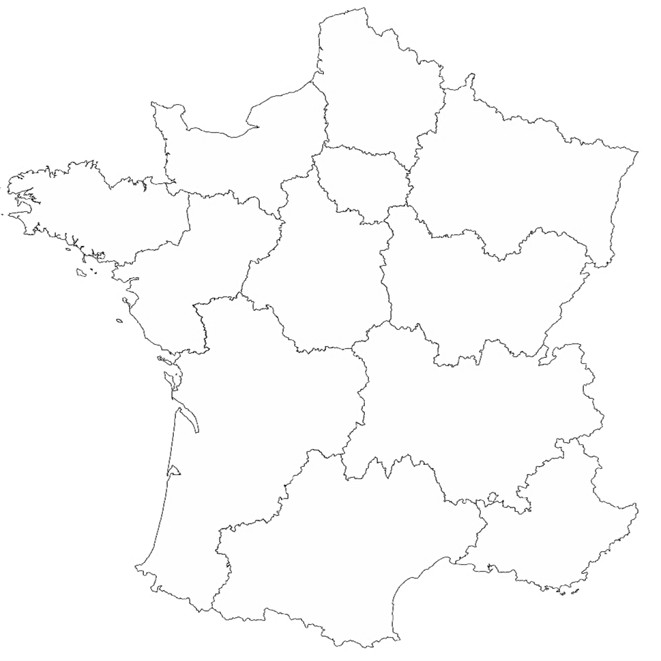
| Coordinating partner : Bernard MAILLÈRE – UMR 0496 CEA – INRAE – Paris Saclay University Medecine and Healthcare Technologies Department |
|||||||
| Pierre MARTINEAU – UMR 1194 Inserm – Montpellier Univsersity Montpellier Cancer Research Institute |
|||||||
| Nathalie HEUZE-VOURC‘H – UMR 1100 Inserm – Tours University Center for the Study of Respiratory Pathologies (CEPR) |
|||||||
| Marc PALLARDY – UMR 996 Inserm – Paris Saclay University Inflammation, Microbiome and Immunosurveillance |
|||||||
| Myriam TAVERNA – UMR 8612 CNRS – Paris Saclay University Institut Galien Paris-Saclay (IGPS) |
|||||||
| Frédéric PECORARI – UMR 1302 / ERL 6001 CNRS – Inserm – Nantes University Immunology and new concepts in immunotherapy (INCIT) |
|||||||
| Pierre BRUHNS – UMR 1222 Inserm – Institut Pasteur Antibodies in Therapy and Pathology |