Personalised phage therapy against gram-negative multidrug resIstant organisms
Jean-Damien Ricard – UMR 1137
Université Paris Cité – Inserm
Centre de recherche Infection, Antimicrobiens, Modélisation, Evolution (IAME)
Phagotherapy
Phage Biobank
Personalised medicine
Machine learning prediction
Digital holography
- Budget: 2.5 M€
- Duration: 4 years (2025 – 2029)
- Reference: ANR-24-PEBI-0005
Antibiotic resistance is a major public health challenge, with significant clinical and economic consequences. In 2019, six pathogenic bacteria, including Escherichia coli, Klebsiella pneumoniae, and Acinetobacter baumannii, each caused more than 250,000 deaths associated with antibiotic resistance. This situation underscores the urgent need for effective alternative therapies.
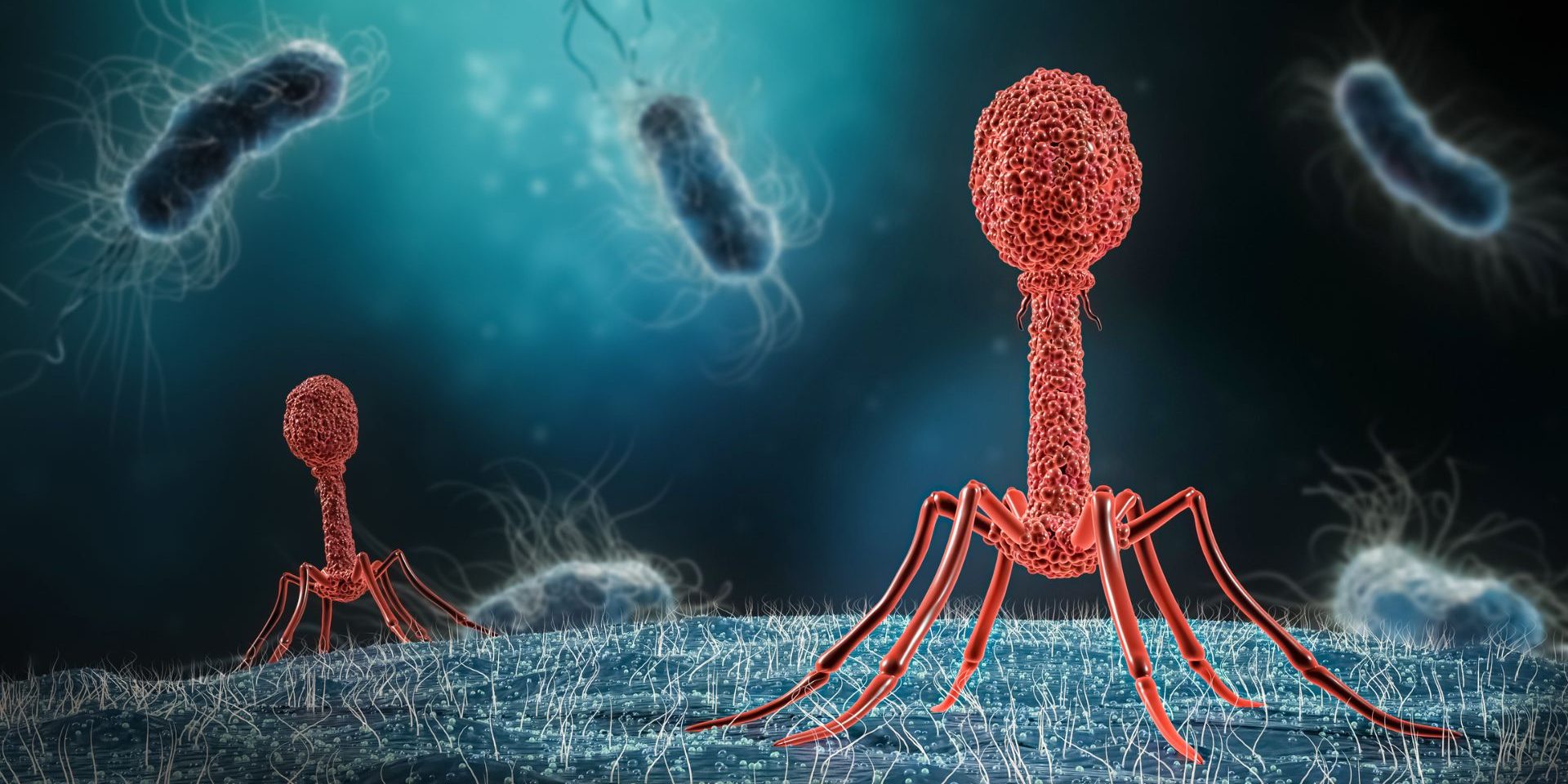
Phage therapy, the treatment of bacterial infections using bacteriophages (phages), viruses that only target bacteria without infecting humans and animals, represents an innovative and promising approach. The high specificity of phages, which can target a single bacterial species or even specific strains, enables the development of personalized treatments. However, this precision requires rapid identification of the phage active against the infecting bacterium. Personalized phage therapy therefore relies on:
- phage banks providing starting materials for the production of phage therapy medicinal products (PTMPs)
- tools to quickly select the most effective phages against the target bacterial strain
- methods ensuring phage stability and quality
The PARADIGM project aims to develop innovative tools and establish a standardized operational process within a dedicated infrastructure, the Phagocenter, which will provide rapid access to the starting materials necessary for the production of PTMPs targeting multidrug-resistant Gram-negative bacteria.
This initiative brings together teams from the Assistance Publique–Hôpitaux de Paris (AP-HP), Institut Pasteur, Université Paris Cité, Sorbonne Université, and Commissariat à l’Énergie Atomique et aux Énergies Alternatives (CEA). Together, they are building a French national pipeline for personalized phage therapy against the multidrug-resistant pathogens E. coli, K. pneumoniae, and A. baumannii.
The main objectives of the project are to:
- Create a national biobank of phages and bacterial host strains.
- Develop digital (in silico) and optical tools to accelerate phagogram analysis.
- Implement methods to monitor the stability of phage suspensions.
- Investigate biocompatible compounds to extend the shelf life of PTMPs.
Through these efforts, PARADIGM will:
- establish a national biobank for three priority multidrug-resistant pathogens;
- accelerate the transfer of phage sensitivity testing from research laboratories to hospitals;
- set national and international standards for phage therapy;
- strengthen a French ecosystem for research and clinical application of phage therapy, with a direct impact on public health and therapeutic innovation.
| Département Médico-Universitaire Enseignement et Soins de Proximité, Recherche, Innovation et Territoires (DMU ESPRIT) AP-HP – AP-HP.Nord – Université Paris Cité Service de Médecine Intensive Réanimation Hôpital Louis Mourier |
|||||||
| Département Médico-Universitaire de Biologie, Génomique Médicales et Hygiène (DMU BioGeMH) AP-HP (GHU AP-HP) – Sorbonne Université Service de Bactériologie Hôpital Saint Antoine |
|||||||
| UMR 1137 Université Paris Cité – Inserm Infection, anti-microbien, modélisation, évolution (IAME) |
|||||||
| UMR 1135 CNRS – Inserm – Sorbonne Université Centre d’Immunologie et de Maladies Infectieuses (CIMI) |
|||||||
| UMR 9002 CEA – Université Grenoble Alpes – Institut Polytechnique de Grenoble Photonique Electronique et Ingénierie Quantiques (PHELIQS) |
|||||||
| Institut Pasteur Centre de Ressource Biologique de l’Institut Pasteur (CRBIP) |