Multidisciplinary approach to stimulate the bioproduction and engineering of Gram+ bacteria’s Extracellular Vesicles (EVs) for therapeutic applications to treat inflammation
Jean-Marc CHATEL – UMR 1319
Agro Paris Tech – INRAE – Paris Saclay University
Institute of Food Microbiology for Health (MICALIS)
Extracellular vesicles
Microbiota
Gram+ bacteria
Inflammation
Bioproduction
Oral delivery
Gut-brain axis
Age related neurodegenerative disorders
Neuromodulation
Gut inflammatory diseases
- Budget : 3,5 M€
- Duration : 4 years (2023 – 2027)
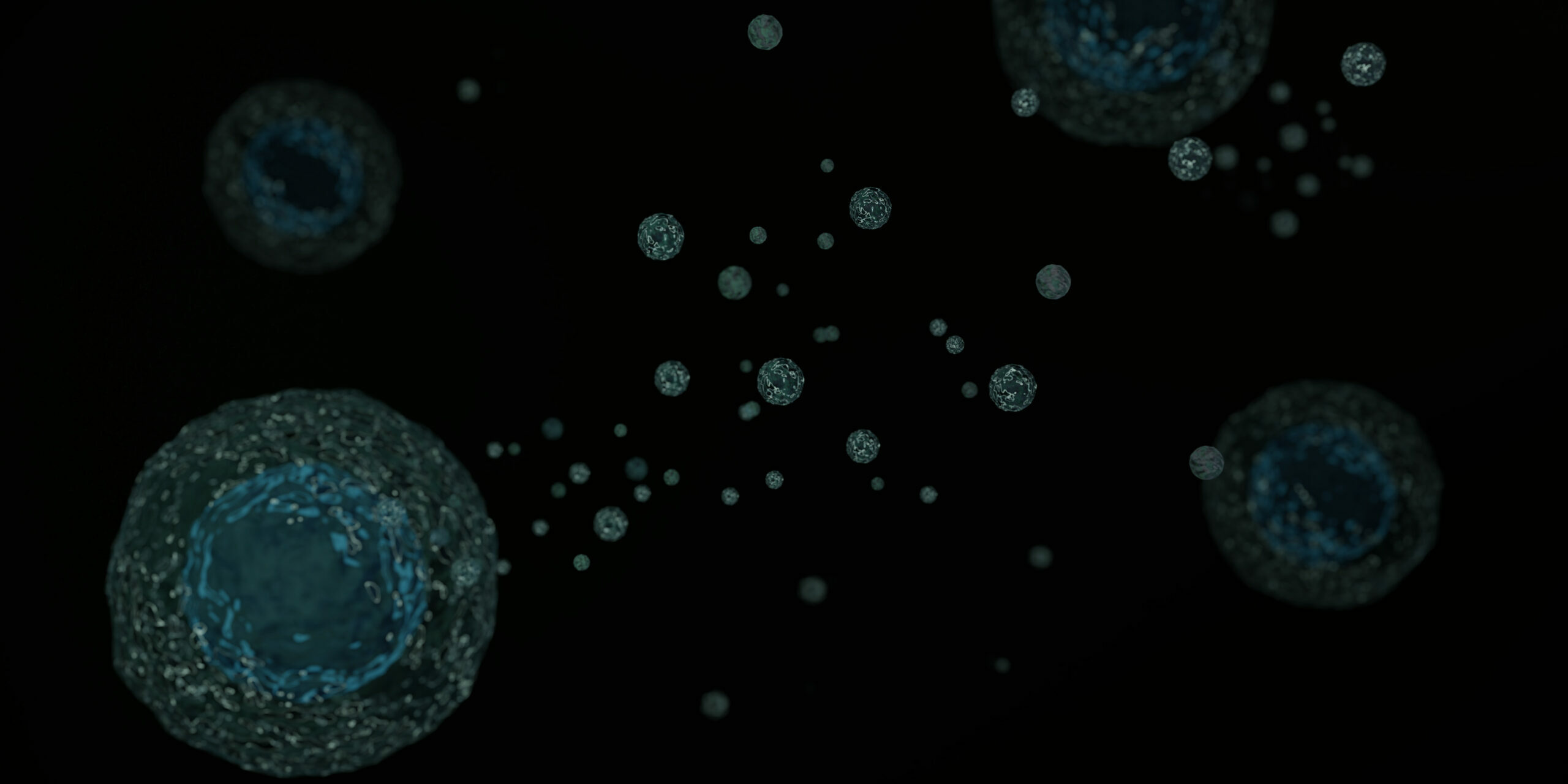
The aim of this project is to propose a biotherapy based on therapeutic extracellular vesicles (EVs) as an alternative to live probiotics. EVs will be produced in a scalable bioreactor at high yield from Gram+ bacteria with anti-inflammatory activities such as Propionibacterium freudenreichii and Faecalibacterium prausnitzii, one industrial and the other originating from the intestinal microbiota. The EVs will be characterised at both biophysical and molecular levels (proteins, lipids, sugars, nucleic acids, metabolites).
We will also engineer the content of EVs to enhance their intrinsic immunomodulatory activity. The anti-inflammatory and neuromodulatory properties of EVs from an
isolated species or a pool of EVs from a combination of species (grown individually) will be tested in vitro in a cell model and in vivo in preclinical models. We will use models of acute inflammation (Inflammatory Bowel Diseases-IBD), low-noise inflammation (Irritable Bowel Syndrome-IBS) associated with cognitive-emotional and behavioral disorders, or in model of neurodegenerative pathology (Alzheimer’s).
In this project, we will have to meet several challenges:
- biotechnological challenge: vesiculation hindered by the bacterial wall;
- therapeutic challenge: suitability and versatility of the biotherapy for 3 therapeutic indications;
- safety challenge: reducing infectious risks;
- pharmaceutical challenge: mastering quality attributes, quantity, identity, purity and biological activity;
- a challenge of batch-to-batch reproducibility, stability and conservation.
The multidisciplinary consortium gathered around this project has the necessary assets for its success by bringing together international-level expertise in microbiology, pre-industrial microbial biomass production processes and pharmaceutical quality stabilisation/preservation, physical stimulation for the production of high-yield EVs and a high-throughput/high-resolution analytical approach/artificial intelligence, chemistry for the chemical and genetic engineering of bacteria/EVs, pain pharmacology and the study of associated behavioral disturbances, and finally, the gut/brain relationship and neurodegeneration. The STLO and MICALIS teams, specialists in P. freudenreichii and F. prausnitzii respectively, were the first to demonstrate the therapeutic interest of these two bacteria and their EVs. The synergy between these 7 teams will position France as a leader in the field of new biotherapies based on bacterial EVs.
The BACTER-EV-BOOSTER project aims to develop a new generation of treatments inspired by bacteria known to have beneficial effects on health and naturally found in the body. Rather than using live bacteria, as is the case with probiotics, researchers are focusing on tiny particles released by these bacteria, known as extracellular vesicles. These particles can deliver messages to cells and help reduce inflammation. This approach could be safer, easier to manufacture and easier to store.
The project also aims to enhance the effectiveness of these particles to improve their therapeutic effects. They will be studied as potential treatments for inflammatory bowel diseases, irritable bowel syndrome and brain diseases such as Alzheimer’s disease. At the same time, researchers are developing methods to produce these particles in large quantities and with consistent quality, helping to prepare for their future use in medicine.
By bringing together several French research teams with complementary expertise, BACTER-EV-BOOSTER aims to position France as a leading player in the development of these new biotherapies.
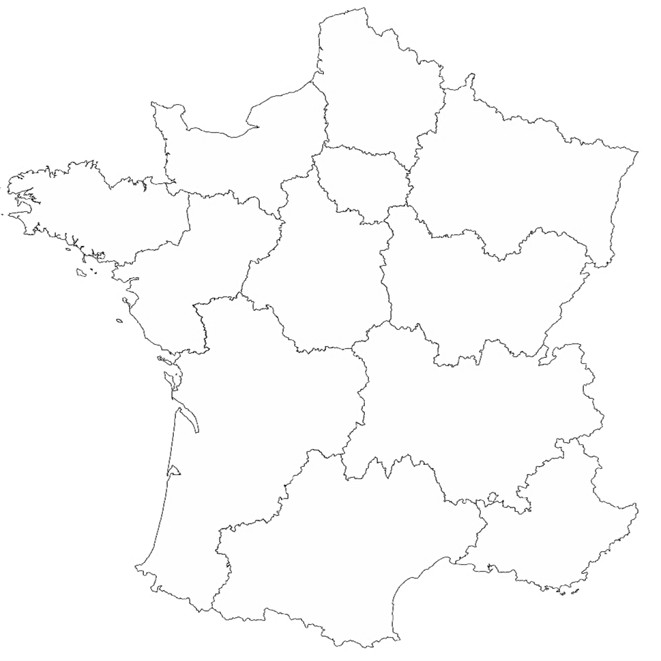
| Coordinating partner : Jean-Marc CHATEL – UMR 1319 Agro Paris Tech – INRAE – Paris Saclay University Institute of Food Microbiology for Health (MICALIS) |
|||||||
| Amanda SILVA BRUN – UMR 7057 CNRS – Paris Cité University Complex Materials and Systems Laboratory (MSC) |
|||||||
| Michel NEUNLIST – UMR 1235 Inserm – Nantes University Enteric Nervous System in gut and brain disorders (TENS) |
|||||||
| Laurent BENEY – UMR PAM (Food and Microbiological Processes) Institut d’Agronomie de Dijon – Bourgogne University Bourgogne Franche-Comté University |
|||||||
| Clotilde POLICAR – UMR 7203 CNRS – ENS – Paris Sciences et Lettre University – Sorbonne University Laboratory of BioMolecules (LBM) |
|||||||
| Frédéric CARVALHO – UMR 1107 Inserm – Clermont Auvergne University Biophysical and Neurosensory Pain (NeuroDol) |